
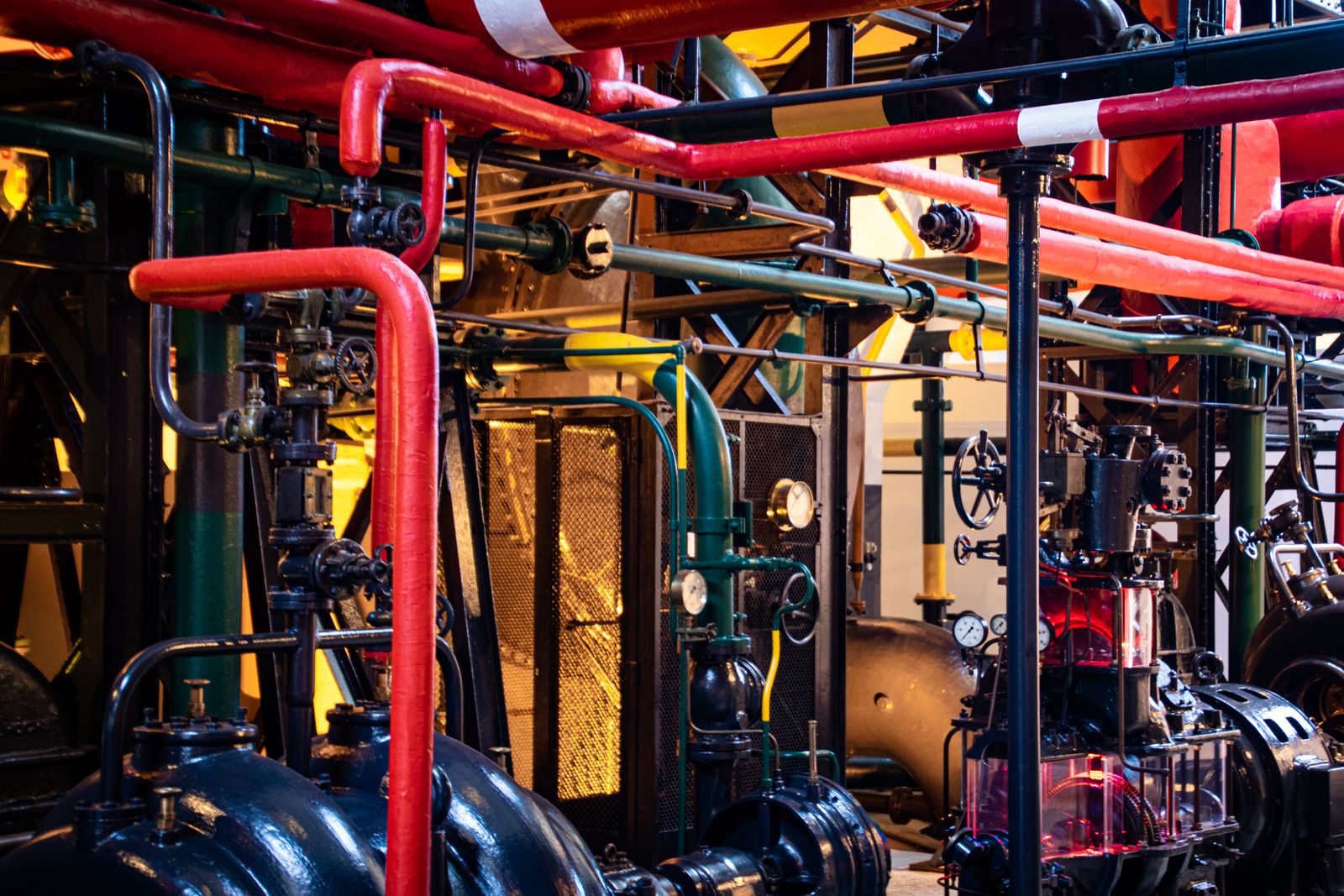
Boilers heat differently from furnaces — and better, many owners will tell you. Instead of blowing hot air, a boiler heats water and circulates it through baseboards, radiators, or in-floor tubing. The heat is even, silent, and dust-free: no blower, no drafts, no vents stirring up allergens. Plenty of Fort Collins homes still run on hydronic heat, especially the older neighborhoods, and they deserve a technician who actually understands boilers.
We repair, maintain, and install residential boilers across Fort Collins and Larimer County, from aging cast-iron workhorses to modern high-efficiency condensing units.
Boiler trouble? Call (970) 555-0100 to request service, or check availability online.
How boiler heat works (and why owners love it)
A boiler heats water to 140–180°F and a circulator pump pushes it through a loop of baseboard units or radiators. Each room's heat comes off the loop; thermostats control zone valves that open and close sections. There's no air handler, no ductwork, and almost no noise — just steady radiant warmth.
That simplicity is the appeal and the trap. Boilers have fewer parts than forced-air systems, so they run for decades — but when something does fail, it tends to be water-related, and water damage doesn't wait.
Boiler repairs we handle
- No heat / lukewarm radiators: usually air trapped in the system (needs bleeding), a failed circulator pump, or a stuck zone valve.
- Leaking boiler or piping: pinhole leaks in old piping, failed seals, pressure relief valve discharging. We find the source and fix it before water does real damage.
- Pressure problems: boilers run at 12–15 psi cold. Pressure that keeps dropping means a leak; pressure that keeps climbing means an expansion tank or fill valve issue.
- Ignition and burner issues: same fundamentals as a furnace: ignitors, flame sensors, gas valves, venting.
- Noisy operation: kettling (rumbling from scale buildup on the heat exchanger), air in the lines causing gurgling, or a failing circulator bearing.
- Annual service: combustion check, water chemistry glance, safety valve test, control verification.
The hard water problem
This is the big Fort Collins boiler issue: our water carries enough minerals to scale up a heat exchanger over the years. Scale insulates the metal from the water. The boiler works harder to transfer heat, efficiency drops, and the unit starts kettling. On older boilers we descale; on new installs we discuss water treatment options. If your boiler is rumbling like a kettle, scale is the likely culprit, and catching it early prevents heat exchanger damage.
Boiler installation and replacement
When a boiler is done (cracked sections, a heat exchanger that's had it, or efficiency so low the gas bills sting), replacement is straightforward but not casual. We size the new boiler to the radiation in the house. That's the baseboards and radiators — they determine the load. Square footage is only part of the picture. We choose between standard and high-efficiency condensing models, and handle venting, piping, and controls.
Condensing boilers (90%+ efficiency) need different venting than old atmospheric units and produce condensate that must drain. We handle the conversion. Zone controls get modernized at the same time. Old single-zone systems can gain room-by-room control with new zone valves and thermostats — the single best comfort upgrade for a boiler home.
Boiler maintenance: the annual visit
Boilers need yearly attention like any combustion appliance. The visit covers burner and ignition check, flue inspection, pressure and temperature verification, expansion tank check, safety relief valve test, and a look at water quality. Annual service catches the slow failures — the weeping seal, the drifting pressure — before they become the flooded basement.
What This Costs in the Fort Collins Area
These are researched market ranges from national and Colorado-regional sources (ConsumerAffairs' 2026 boiler cost guide), NOT our prices — every home is different. Request a quote for your exact cost.
| Item | Market range | What drives the range |
|---|---|---|
| Boiler replacement (installed) | $4,000–$7,500 (avg ~$5,750) | Boiler size (BTU — the unit of heating capacity); efficiency tier (80–83% moderate vs. 90%+ high-efficiency) |
What affects the cost of boiler work
- Repair type: a zone valve or circulator pump is routine; heat exchanger work is major.
- Boiler age: sections and parts for 30-year-old units can be hard to source.
- Water damage risk: emergency leak calls get priority handling.
- For replacement: boiler size, efficiency tier (standard vs. condensing), venting changes, and zone control upgrades.
Related services: Radiant Floor Heating, Furnace Repair, Whole-Home Humidifiers
Frequently Asked Questions
How long do boilers last?
Why are some of my radiators cold while others are hot?
What does it mean when my boiler is making a rumbling or kettling noise?
Should I replace my old boiler with a high-efficiency condensing model?
Do boilers need carbon monoxide detectors nearby?
Can I add air conditioning to a house with a boiler?
Call (970) 555-0100 for boiler repair and installation in Fort Collins, CO. Hydronic heat, handled by people who know it.