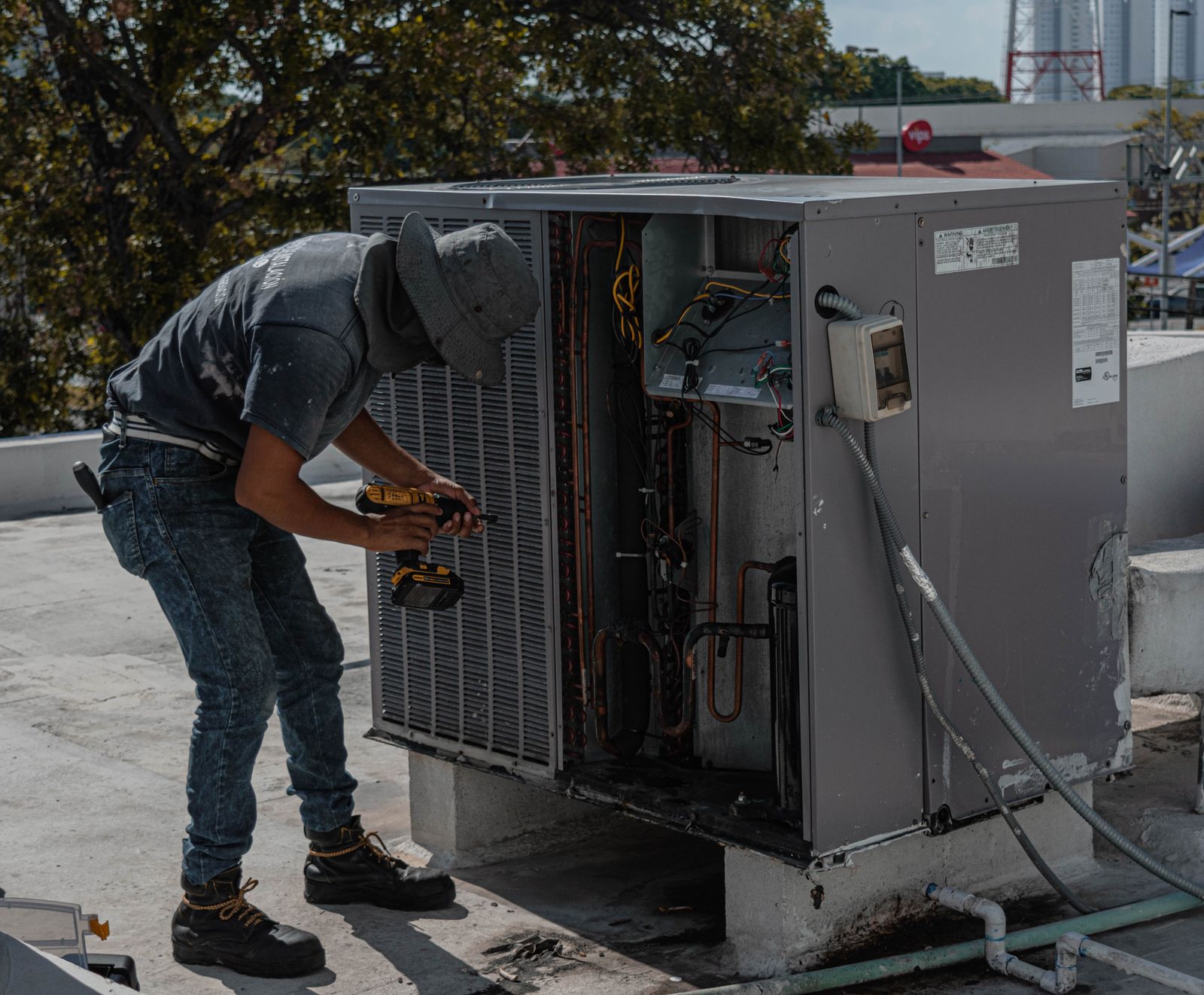
Heating & Cooling Help for Fort Collins Homes
Fort Collins HVAC Pros is the heating and cooling company Fort Collins, CO homeowners call when their system stops keeping up. Furnaces that won't fire on a January morning. AC units that give up during the first hot week of June. We repair, replace, and maintain the equipment Fort Collins homes actually use.
From emergency repairs to full system replacements, our heating and cooling team in Fort Collins, CO covers furnaces, air conditioners, heat pumps, ductwork, and indoor air quality. One call handles all of it.
Call (970) 555-0100 to request a quote or check availability. You'll talk through what's going on with your system, get a clear next step, and know exactly what happens before anyone comes out.
What You Can Count On
- A real diagnosis first. We look at the whole system (thermostat, ductwork, airflow, and the equipment itself) before recommending anything.
- Written quotes. Every job gets a written estimate with parts and labor broken out, so there are no surprises.
- No pressure to replace. If a repair makes sense, we'll say so. If the equipment is done, we'll explain why.
- Clean visits. Shoe covers, drop cloths, and a tidy workspace when we leave.
- 20 services under one roof. Heating, cooling, ductwork, air quality, and controls — one call covers it all.
- Northern Colorado coverage. From Old Town Fort Collins to Timnath, Windsor, Wellington, and the canyon communities, we serve the full 30-mile area.
Our Services
Repair covers most calls: failed capacitors, dead blower motors, cracked heat exchangers, refrigerant leaks, and thermostats that read wrong. Installation covers full system replacement and new construction rough-ins. Maintenance keeps what you already own running longer.
HVAC Built for Fort Collins Weather
Fort Collins sits at about 5,000 feet in a high-desert climate. That's 300-plus days of sunshine a year, summer highs that spike fast, and winter nights that drop hard. Systems here work both ends of the spectrum, often within the same week in April.
That swings things in a few specific ways:
- Freeze-thaw shoulder seasons strain older furnaces. March and October cold snaps hit equipment that sat idle for months, which is when cracked heat exchangers and failed ignitors show up.
- Wildfire smoke season is real here. When smoke rolls in from the west, your HVAC becomes your home's air filter. Sealed ductwork and high-grade filtration matter more here than in most cities.
- Dry air year-round. Relative humidity in Fort Collins routinely sits in the teens and twenties. Whole-home humidifiers protect wood floors, cabinets, and sinuses, and this is one of our most common add-ons.
- Hail. Front Range hailstorms dent condenser fins and damage rooftop units. After a storm, a bent fin comb and coil cleaning can be the difference between a working AC and a dead compressor.
- Old Town and historic homes. Pre-war houses near Old Town have quirks: undersized returns, knob-and-tube-era basements, radiators instead of forced air. Ductless mini-splits and boiler service cover a lot of those situations.
- New builds in Timnath, Severance, and Windsor. New construction means heat pumps and high-efficiency furnaces that need correct commissioning — refrigerant charge, airflow balance, and thermostat setup done right from day one.
Colorado also has its own heating traditions. Swamp coolers still cool plenty of homes on the dry east side of town. Radiant floor heating shows up in custom builds and remodels. We service all of it.
What HVAC Work Costs Here
Costs vary too much to quote by page. Any honest contractor will say the same. Here's what actually moves the number on a repair or replacement in northern Colorado:
- Equipment size and efficiency rating. Higher-efficiency equipment costs more up front. For air conditioners, that's the SEER2 rating (higher SEER2 means less electricity per hour of cooling), so a 14 SEER2 condenser and an 18 SEER2 unit are different price classes. For furnaces, it's AFUE (the share of your gas that becomes heat), so 80% and 96%+ models price differently too.
- Access and existing conditions. A furnace in an open basement costs less to replace than one in a tight crawlspace. Rooftop units need crane time.
- Ductwork condition. Leaky, undersized, or disconnected ducts get found on nearly every replacement job. Fixing them adds cost and fixes comfort problems.
- Electrical and venting upgrades. Older panels and outdated flue venting sometimes need updates to meet current code.
- Permits. Larimer County and Fort Collins require permits on most equipment replacements. We handle the paperwork.
What we can promise: a written quote before work starts, with the option of repair vs replace laid out plainly. Call (970) 555-0100 and we'll tell you what it takes to get an accurate number for your system.
How It Works
- Call or send the form. Tell us what's happening: no cooling, strange noise, water near the furnace, thermostat blank. We'll ask a few quick questions.
- Schedule a visit. We set a time window that works for you and confirm before we head out.
- Get a diagnosis. The tech inspects the equipment, tests the components, and explains what's wrong in plain language.
- Approve a written quote. Parts, labor, timeline: all in writing before any work starts.
- We do the work. Repairs are typically same-visit. Installations get scheduled fast, and we haul the old equipment away.
- Walkthrough and follow-up. We show you what was done, answer questions, and leave you with maintenance notes.
Frequently Asked Questions
How fast can you get to a no-heat call in Fort Collins?
Call
(970) 555-0100 and we'll give you an honest time window. Heating emergencies get priority, especially during cold snaps. After-hours availability depends on the day, so the fastest move is always to call rather than wait.
Do you repair all brands of furnaces and ACs?
Yes. We service major residential brands (Carrier, Lennox, Trane, Rheem, Goodman, and others), including older discontinued models. Parts availability is the only real limitation, and we'll tell you up front if a part is obsolete.
Should I repair or replace my old furnace?
It comes down to age, repair cost, and safety. Furnaces over 15 years old with a major failure (like a cracked heat exchanger) usually make replacement the smarter call. A younger unit with a bad ignitor or sensor is a straightforward repair. We lay out both options in writing.
Can you work on swamp coolers too?
Yes. Plenty of Fort Collins homes still run evaporative coolers, and we handle seasonal startup, shutdown, pad replacement, and repairs. We can also talk through whether a swamp cooler or refrigerated AC fits your house better.
Do you offer maintenance plans?
Yes — spring and fall tune-ups under one plan, with priority scheduling and reminders so you don't have to remember. See
HVAC maintenance plans for details, or call
(970) 555-0100.
Which areas do you serve?
Fort Collins plus about a 30-mile radius: Loveland, Greeley, Windsor, Timnath, Wellington, Severance, Berthoud, Johnstown, and the smaller communities in between. See the full list on our
service areas page page.
What is the $5,000 rule for HVAC?
Multiply your system's age in years by the cost of the repair. If the result is over $5,000, replacing the system usually saves you money; under $5,000, repairing is usually the better call. Example: a 12-year-old furnace with a $500 repair quote: 12 × 500 = $6,000, so replacement is the financially smarter move. The same furnace at 6 years old: 6 × 500 = $3,000, so it gets repaired. There's a companion rule too: if a repair costs more than half of what a new system costs and the unit is past middle age, replace it. These are contractor rules of thumb, not government standards, but they're grounded in real lifespan data — gas furnaces average 15–20 years and central ACs 10–15 years, so a big repair bill on a unit near the end of that range is money you'd likely spend again soon.
What are the new HVAC laws in Colorado?
Most homeowners asking this mean the new federal efficiency standards hitting furnaces and ACs. The U.S. Department of Energy has finalized tougher residential furnace efficiency standards projected to save Americans $15 billion. In practice, basic 80% AFUE furnaces are on their way out and new gas furnaces in Colorado will mostly be 95%+ condensing models. Colorado sits in ENERGY STAR's Northern region, where as of July 31, 2026, newly certified gas furnaces must reach 97% AFUE. For you, that means a new furnace costs more up front but wastes far less fuel: a 95 AFUE furnace turns 95 cents of every gas dollar into heat, versus 80 cents for an older 80% model. Fort Collins and Larimer County also require permits on most equipment replacements, which we handle.
How much does it cost to replace a furnace for a 2000 sq ft house?
For a typical 2,000-square-foot Fort Collins home, full furnace replacement runs $2,823–$6,897 installed, with most homeowners paying around $4,814 (HomeAdvisor, June 2026 market data — a range, not our price). What moves the number: the efficiency tier (an 80% AFUE furnace costs less than a 96%+ condensing model but burns more gas every winter), ductwork condition, venting or electrical upgrades to meet current code, and access: a furnace in an open basement costs less to swap than one in a tight crawlspace. Fort Collins adds a local wrinkle: at 5,001 feet of elevation, gas furnaces must be derated roughly 12% below their sea-level rating, so a proper Manual J load calculation (the room-by-room heating and cooling math, required by Fort Collins code) matters more here than at sea level. The only way to get an accurate number is a written quote after a tech sees your home.
Is it cheaper to replace furnace and AC together?
Almost always, yes. You pay for one crew visit instead of two, one permit, and the ductwork and electrical get touched once instead of twice. A complete heating-and-cooling system replacement runs $5,000–$12,500 nationally, averaging about $7,500 (HomeAdvisor 2026). Doing the furnace in January and the AC in July means paying mobilization twice and often missing package pricing. There's a performance reason too: a new high-efficiency furnace paired with your old AC coil creates a mismatched system that can't reach its rated efficiency, while a matched set is rated and tuned to work together. If your AC or heat pump is over 10 years old, ENERGY STAR notes that new qualified equipment uses at least 20% less energy than a new standard model. The one exception: if one system is young and healthy and the other dies, replacing just the dead one makes sense.
Is a heat pump a good idea in Colorado?
For many Fort Collins homes, yes — with the right setup. Modern cold-climate heat pumps handle most of our winter; Fort Collins' winter design temperature is −4°F, and today's better heat pumps keep producing heat well below freezing while doubling as efficient air conditioning in summer. Where it gets tricky: electricity here costs more per unit of heat than natural gas when gas prices are low, so a heat pump running solo on the coldest January nights can push up your Xcel Energy bill. That's why many Colorado homes use a dual-fuel setup: the heat pump carries mild weather efficiently and a gas furnace takes over below freezing. Heat pumps last about 10–15 years with maintenance. The honest answer depends on your insulation, your ductwork, and your actual utility rates, so have a contractor run your numbers before you commit. See
heat pump services.
Do I need a humidifier in Colorado?
For most homes here, yes — it's one of the most noticeable comfort upgrades you can make. Fort Collins' winter air is genuinely dry, and indoor relative humidity in a heated home often drops into the teens and twenties, while the EPA recommends 30–50% indoors. Signs you need one: dry skin and cracked lips all winter, static shocks, scratchy sinuses, gaps opening in wood floors, and furniture that seems to dry out. A whole-home humidifier ties into your ductwork and adds moisture automatically (no daily refilling like portable units), for about $392–$765 installed (HomeAdvisor market range), and it lasts roughly 12 years. Keeping humidity around 30–40% also makes 70 degrees feel warmer, so many families nudge the thermostat down and save on heating. See
whole-home humidifiers.
Is air duct cleaning really worth the money?
Sometimes. It depends on what your ducts actually need. Duct cleaning is worth the money after a remodel (construction dust coats everything), when you've moved into a house with unknown duct history, when dust visibly puffs from vents, or when allergies and pet dander are a real problem. A typical whole-house cleaning runs $300–$700, averaging about $475 (Angi 2026). Be wary of $99 whole-house coupons, which usually mean a rushed vacuum and an upsell pitch. But know what cleaning can't do: it removes accumulated dust, not leaks. ENERGY STAR estimates a typical duct system loses 20–30% of the air it moves, and no amount of cleaning fixes that — if some rooms never get comfortable, you need a duct inspection and sealing, not a cleaning. See
air duct cleaning.
What is the most common problem with AC units?
A dirty air filter choking off airflow. And it's the easiest problem to prevent. A clogged filter can freeze the indoor coil, overwork the blower motor, and raise energy use by 5–15% (U.S. DOE), all while the house stops cooling. After that, the usual suspects are refrigerant leaks, failed capacitors (the small part that starts the motors, and they die most in summer heat), and condensers choked with cottonwood fluff or hail-bent fins, both very Fort Collins problems. Most of these give warning signs first: weak airflow, warm air from vents, short cycling, odd noises, or bills climbing with no rate change. A spring tune-up catches nearly all of them before the first hot week. Check your filter monthly in summer. See
AC repair.
Do swamp coolers work well in Colorado?
Yes — in Colorado's dry climate, swamp coolers (evaporative coolers) genuinely work well. Xcel Energy reports they can use up to 75% less energy than a traditional central AC, delivering air 15–30 degrees cooler than the outdoor air. A 90-degree afternoon becomes comfortable 70-degree air inside. They shine in Fort Collins because our summer air is so dry. The trade-offs: they add indoor humidity, so they struggle during the muggiest monsoon stretches of July and August, and they need hands-on seasonal care — spring startup, pad replacement, and full winterization each fall. Refrigerated AC costs more to run but cools consistently no matter the outdoor humidity and needs less of your attention. Many homes run a swamp cooler for the dry early summer and lean on AC for the hottest weeks. See
swamp cooler services.
What is the best time of year to buy a furnace?
Fall — September and October — is the sweet spot. Contractors have open schedules between the summer AC rush and winter heating emergencies, so you get faster installation dates and regular pricing instead of emergency rates. Early spring works the same way. The worst time is mid-January during a cold snap: that's when furnaces die, every contractor is booked with no-heat calls, and you're choosing equipment under pressure instead of comparing options. If your furnace is 12–15 years old (nearing the end of the typical 15–20-year lifespan), start planning now rather than waiting for the breakdown. You'll get proper Manual J sizing, time to compare efficiency tiers, and installation on your schedule. See
furnace installation.
Customer Reviews
Customer Reviews[Placeholder — real customer reviews to be supplied. No reviews are published here yet.]
Get Your HVAC Handled
No heat, no cooling, or a system that's just acting wrong? Call Fort Collins HVAC Pros at (970) 555-0100. Request a quote, check availability, and get a clear plan for your system. We serve Fort Collins and the surrounding northern Colorado communities.