
When the house stops cooling on a 90-degree July afternoon, you want a straight answer and a fix that holds. That's our process on every visit: find the actual failure, show you what we found, and repair it so it stays fixed.
Fort Collins summers run hot, dry, and dusty, and our afternoon hailstorms don't care about your condenser fins. Those local conditions cause a predictable set of AC failures. That means we can usually narrow down your problem over the phone before we roll a truck.
Need AC repair now? Call (970) 555-0100 to request service, or reach out to check availability.
How we diagnose an AC problem
A good AC repair starts before any wrench comes out. Our technician checks the system the way the manufacturer laid it out: thermostat signal, electrical draw on the compressor and blower motor, refrigerant pressures, temperature split across the evaporator coil, and airflow at the registers. Each reading either confirms or rules out a cause.
That method matters because AC symptoms overlap — weak cooling can mean low refrigerant, a failing capacitor, a clogged coil, or ducts leaking conditioned air (ENERGY STAR data puts typical duct losses at 20–30% of the air moving through the system). Replacing the wrong part fixes nothing. We test first, then repair what's actually broken.
Common repairs we handle:
- Capacitors and contactors: electrical components that wear out from summer heat cycling; usually the cheapest fix and the most common one.
- Refrigerant leaks: located with an electronic detector, repaired at the joint or coil, then recharged to spec. We don't just top off and leave.
- Blower motor and fan motor replacement: when airflow dies, cooling dies with it.
- Evaporator and condenser coil cleaning: Fort Collins dust bakes onto coils fast and strangles heat transfer.
- Drain line clearing: clogged condensate lines shut systems down or flood the area around the air handler.
- Thermostat and control issues: bad readings or failed relays that mimic a dead system.
AC problems we see most in Fort Collins homes
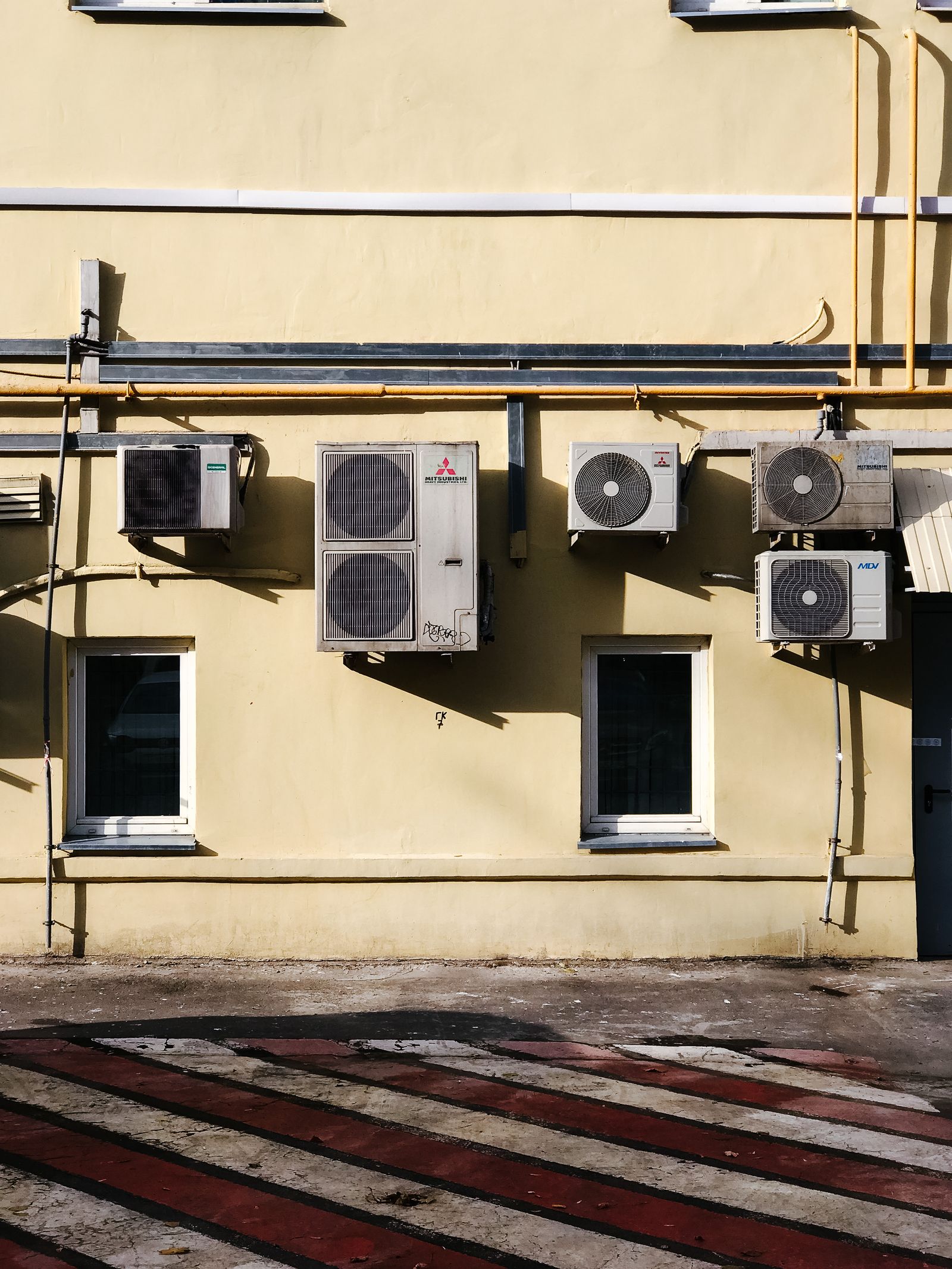
Our climate creates its own repair patterns. Spring hailstorms bend and crush the thin aluminum fins on outdoor condenser coils, choking airflow through the unit — sometimes the damage is obvious, sometimes it just quietly drives up your electric bill. Summer dust storms and cottonwood fluff coat coils in a mat that acts like insulation, keeping heat trapped instead of releasing it. Monsoon-season lightning surges fry capacitors and control boards. And many homes in Old Town and the older neighborhoods still run systems past their prime, where a $200 electrical repair beats a full replacement. That's only true if the compressor and heat exchanger are still healthy.
If your outdoor unit took a direct hail hit, mention it when you call — it changes what we bring.
Signs your air conditioner needs repair
- Air from the vents feels warm or barely cool
- The system runs constantly but the house never reaches the set temperature
- Some rooms cool fine while others stay warm
- New noises: grinding, squealing, rattling, or loud buzzing from the outdoor unit
- The breaker trips when the AC kicks on
- Water pooling near the indoor unit
- Your electric bill jumps with no change in usage
- The system short-cycles — turning on and off every few minutes
Before calling, check the thermostat batteries, the breaker, and the air filter — a packed filter can shut down cooling entirely, and the U.S. Department of Energy notes that swapping a dirty filter for a clean one can cut an air conditioner's energy consumption 5–15%. If those check out, it's time for a technician.
What affects the cost of AC repair
We don't quote flat prices sight unseen, because the same symptom can come from a $30 part or a major component. The factors that move a repair bill:
- Which component failed: electrical parts cost far less than a compressor or coil.
- Refrigerant type and amount: older systems use refrigerants that cost more per pound, and a leak repair adds labor.
- Accessibility: a coil in an open basement is quick work; the same job in a cramped crawlspace or a rooftop takes longer.
- System age and parts availability: discontinued parts for 15+ year old units can be harder to source.
- Whether it's repair vs. replace territory: we'll tell you honestly when a repair no longer makes sense on an aging system.
You'll get the price before we start. No work happens without your approval.
How an AC repair visit works
- You call or request service online. We ask what the system is doing — or not doing — and schedule a window that works for you.
- Diagnosis. The technician inspects the full system, takes readings, and pinpoints the failed component.
- Straight quote. You see the price and what's included before anything is touched.
- Repair. Most AC repairs finish in one visit from a stocked truck.
- Test and verify. We run the system, confirm the temperature split and pressures, and make sure it's cooling the house before we leave.
Related services: AC Installation, HVAC Tune-Up, Emergency HVAC Repair
Frequently Asked Questions
My AC is blowing warm air but the fan is running. What's the most likely cause?
Can hail-damaged condenser fins be repaired, or does the unit need replacing?
How long does a typical AC repair take?
Is it worth repairing a 15-year-old air conditioner?
Why does my AC freeze up?
What are the signs my AC needs repair?
Do you service all brands of air conditioners?
Call (970) 555-0100 for AC repair in Fort Collins, CO, or request a quote online. We'll find the problem and fix it right the first time.